


Click Here for Free Bodybuilding and Fitness Magazine Subscription
Protein Requirements For Bodybuilding
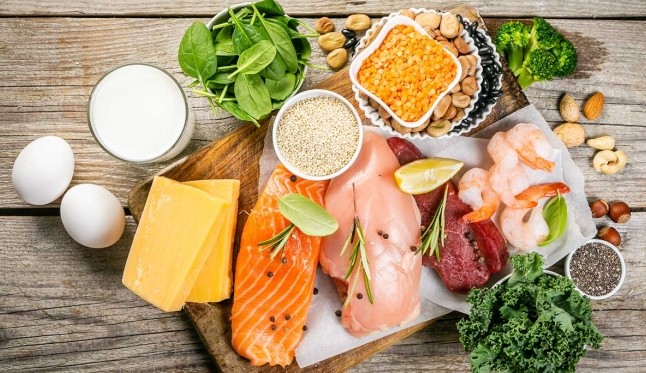
How Much Protein Per Day For Bodybuilding
How much protein should an athlete consume? A joint position paper from the American Dietetic Association (ADA) and the Canadian Dietetic Association (CDA) recommends: 1 to 1.5 grams of protein per kilogram of body weight each day, an amount somewhat higher then the 0.8 grams per kilogram recommended for sedentary people. (Divide weight in pounds by 2.2 to get weight in kilograms.) Other experts disagree with the ADA and recommend higher protein intakes. For example, one group of researchers found that 2 grams of protein per kilogram per day effectively maintained positive nitrogen balance during early training and prevented the drop in blood hemoglobin concentrations observed at lower protein intakes. The following table lists some recommendations and translates them into daily intakes for an athlete who weighs 70 kilograms (154 pounds).
| Authority | Recommendation (g/kg/day) | Protein/Day (g) |
|---|---|---|
| Food and Nutrition Board | 0.8 | 56 |
| ADA/CDA | 1.0 - 1.5 | 70 - 105 |
| Lemon, P.W.R. (endurance athletes) | 1.2 - 1.4 | 70 - 84 |
| Lemon, P.W.R. (strength-speed athletes) | 1.2 - 1.7 | 91 - 112 |
| Yoshimura (early training) | 2.0 | 140 |
Measuring Protein Quality
Researchers have developed the protein digestibility-corrected amino acid score, or PDCAAS. The PDCAAS is the main measure used by those establishing the protein values listed on food labels. This system of measurement is geared toward protein needed to support the maintenance of body tissue of adults.
All things being equal, a protein that supplies all the essential amino acids in exactly the right proportions will be most completely used. Chances are that if a diet provides enough of the essential amino acids, then it will meet all the protein needs of the body.
Digestability is also a critical element in evaluating protein sources for human consumption. Simple measures of the total protein contained in a food are not useful by themselves, since, according to those alone, even animal hair or hooves would receive a top score. As the words of its name suggest, the PDCAAS takes into account the digestibility of a protein as well as its amino acid balance. To obtain the PDCAAS, the food is first given a score based on its amino acid balance. Then the score is adjusted to account for the food's digestibility. The following table shows some selected foods and shows their PDCAAS score (the highest possible score is 100%).
| Food | PDCAAS % |
|---|---|
| egg white | 100 |
| ground beef | 100 |
| chicken hot dogs | 100 |
| milk protein (casein) | 100 |
| nonfat milk powder | 100 |
| beef salami | 100 |
| tuna | 100 |
| soybean protein | 94 |
| whole wheat-pea flour (*) | 82 |
| chick peas (garbanzos) | 69 |
| kidney beans | 68 |
| peas | 67 |
| sausage, pork | 63 |
| pinto beans | 61 |
| rolled oats | 57 |
| black beans | 53 |
| lentils | 52 |
| peanut meal | 52 |
| whole wheat | 40 |
| wheat protein (gluten) | 25 |
* An example of mutual supplementation. Combining whole wheat and pea flours yields a protein with a higher PDCAAS than that of either product alone.
Source: Hamilton and Whitney's Nutrition Concepts and ControversiesFor more Bodybuilding and Fitness nutrition information checkout out "The Bodybuilder's Cookbook" available for instant download at http://www.trulyhuge.com/cookbook.htm