call ustest use-mail us


Home | Supplements | eBooks | DVDs | Articles | Forum
Truly Huge Bodybuilding and Fitness

Click Here for Free Bodybuilding and Fitness Magazine Subscription


1950s Bodybuilding
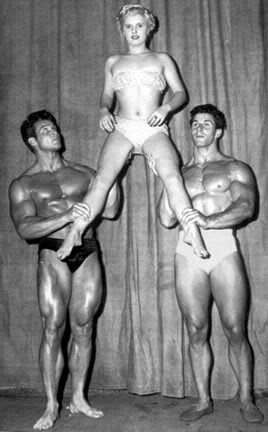
bodybuilding in the 1950s

Bodybuilding in the 1950s


The 1950s saw John Grimek step away from the central role in the sport as other new faces emerged. Again, there was a power vs. classical style split. This was found in the dynamic duo of screen - Reg Park and Steve Reeves.

Both men built outstanding physiques - so much so that they became movie stars to boot. Reeves had a classic physique with lean lines and perfect proportions. Park, like Grimek before him, was thick, rugged and very powerful.

Reeves trained three times a week, working the entire body in a session. He used some unique training exercises and techniques, such as lowering the bar slower than he lifted it on curls. He was known for having the same size calves, neck and biceps - all 18+ inches. It didn't hurt that he was handsome as well.

Park lifted more than did Reeves, and he built an incredibly strong and thick physique. Park could lift very heavy weight loads and trained frequently with heavy duty weights.

Both men won several titles. Reeves won the coveted Mr. America, and then Mr. World, as well as Mr. Universe. Park competed for several decades, winning many top titles.

Being in movies allowed these two top stars of the 50's to push bodybuilding out to the masses in a way that it had never been seen before and gained an entirely new level of interest from the public that would allow for an even bigger surge into the next decade.


1950s Bodybuilders


The leading bodybuilders of the 1950s helped shape what is often called bodybuilding's early Golden Era. During this period, athletes emphasized balanced proportions, broad shoulders, narrow waists, and overall symmetry rather than the extreme muscle size that became popular in later decades.

Steve Reeves
Widely celebrated for his exceptional symmetry and aesthetic physique, Steve Reeves captured the Mr. Universe title in 1950. He later gained international fame through his portrayal of Hercules in a series of successful films.

Reg Park
A prominent British bodybuilder known for combining impressive strength with muscular development, Reg Park won the NABBA Mr. Universe competition in both 1951 and 1958. He also became a major influence on future bodybuilding icon Arnold Schwarzenegger.

Bill Pearl
Recognized as one of the sport's most respected competitors, Bill Pearl earned the Amateur Mr. Universe title in 1953 and later won the Professional Mr. USA championship in 1956. His muscular physique and long-lasting career left a significant mark on bodybuilding.

Vince Gironda
Nicknamed the "Iron Guru", Vince Gironda was admired for his highly defined physique and innovative training methods. Beyond competition, he became a sought-after coach for bodybuilders and actors alike.

John Grimek
Although his greatest competitive successes came during the 1940s, John Grimek remained an influential figure throughout the following decade. His muscularity, strength, and training philosophy helped inspire many athletes of the 1950s.

Melvin Wells
Known for his outstanding physique and particularly impressive arm development, Melvin Wells was a leading competitor during the early and mid-1950s. He frequently competed against the era's top athletes, including Bill Pearl.

Jack Delinger
After winning the Mr. America title in 1949, Jack Delinger continued to be a major presence in bodybuilding during the 1950s. His powerful build helped him secure the Professional Mr. Universe title in 1956.


1950s Bodybuilding Workouts


During the 1950s, bodybuilding programs were typically centered on full-body training sessions performed three times each week. Athletes relied primarily on barbells, dumbbells, and other basic free-weight equipment, emphasizing large multi-joint exercises and generous recovery periods. This period, often referred to as bodybuilding's "Silver Era," came before the rise of highly specialized split routines, high-volume isolation work, and the widespread use of performance-enhancing drugs.

Prominent physiques of the era, including those of Steve Reeves, Reg Park, and George Eiferman, were built with an emphasis on balance, proportion, and natural development. Training methods focused on steadily increasing resistance over time while mastering fundamental strength movements.


Key Principles of 1950s Bodybuilding


Comprehensive Full-Body Training
Rather than dedicating separate days to individual muscle groups, trainees worked the entire body during each workout.

Frequent but Balanced Scheduling
A common approach was training three nonconsecutive days per week-often Monday, Wednesday, and Friday-providing approximately two days of recovery between sessions.

Controlled Exercise Execution
Lifters emphasized strict technique and deliberate movement speed, avoiding excessive momentum and maintaining control throughout both the lifting and lowering phases of each repetition.

Reliance on Foundational Exercises
With limited access to specialized machines, most programs revolved around proven compound movements such as squats, overhead presses, rowing variations, and loaded carries.

Chest Expansion Practices
Many bodybuilders incorporated deep-breathing drills and related exercises intended to promote greater chest and ribcage development, a popular training concept of the era.


1950s Bodybuilding Diet


Bodybuilders of the 1950s generally based their diets on minimally processed, nutrient-rich foods. Common staples included red meat, eggs, dairy products, vegetables, and fruit. Rather than tracking calories or macronutrients with precision, many athletes emphasized eating ample protein, moderate amounts of fat, and controlled portions of carbohydrates to support muscle growth and maintain a lean physique.


Key Components of the Diet


Protein
Protein was considered the cornerstone of muscle development. Popular sources included beef, fish, eggs, and other animal-based foods that were readily available and nutrient-dense.

Dairy Products
Whole milk, cream, and full-fat cheeses were frequently consumed, particularly during periods focused on gaining body weight and strength.

Carbohydrates
Carbohydrate intake was typically moderate and came primarily from natural food sources such as fruit, vegetables, and oats. Refined sugars and heavily processed grain products were generally less common in bodybuilding meal plans of the era.


Notable Examples Of Bodybuilding Diets In The 1950s


Reg Park's High-Calorie Approach

Based on reports describing Reg Park's approach to nutrition for building muscle mass, a typical day's eating plan may have included the following:

Meal 1: Multiple eggs, approximately two pints of milk, and either fresh fruit or freshly squeezed orange juice.

Meal 2: A substantial serving of vegetable soup, a large beef steak, baked potatoes, a generous salad, and about one pint of milk.

Meal 3: Roast chicken accompanied by baked potatoes, a mixed salad, and one pint of milk.

Meal 4: Another steak-based meal featuring vegetable soup, potatoes, salad, and a pint of milk.

Meal 5: A second chicken meal served with potatoes, salad, and one pint of milk.

Meal 6: A lighter final meal consisting of vegetable soup, salad, and roughly two pints of milk.

This eating pattern emphasized high amounts of protein, whole foods, vegetables, potatoes, and milk, reflecting the nutritional practices commonly associated with strength athletes of that era.

Vince Gironda's Low-Carbohydrate Strategy

For getting maximum muscle definition trainer and bodybuilding coach Vince Gironda favored a nutrition plan that emphasized protein and fat while keeping carbohydrate intake very low.

Primary Foods
His recommendations often revolved around eggs, meat, water, and occasionally coffee.

Supplement Use
Gironda was known for promoting supplements, milk and egg protein, amino acids and desiccated liver tablets.

Carbohydrate Timing
Some versions of his dietary approach incorporated infrequent carbohydrate meals, allowing limited servings of foods such as rice or vegetables after several days of very low carbohydrate intake.


Click Here for a Chance to Win Free Bodybuilding Supplements